
Koha home
The Haffkine Institute Library
One of India's oldest biomedical research libraries, serving the Institute's scientists since the turn of the twentieth century. Explore our history, our reading room, and the heritage campus that surrounds it.
Library history
From a plague-research laboratory to a modern knowledge centre.
A library born of discovery
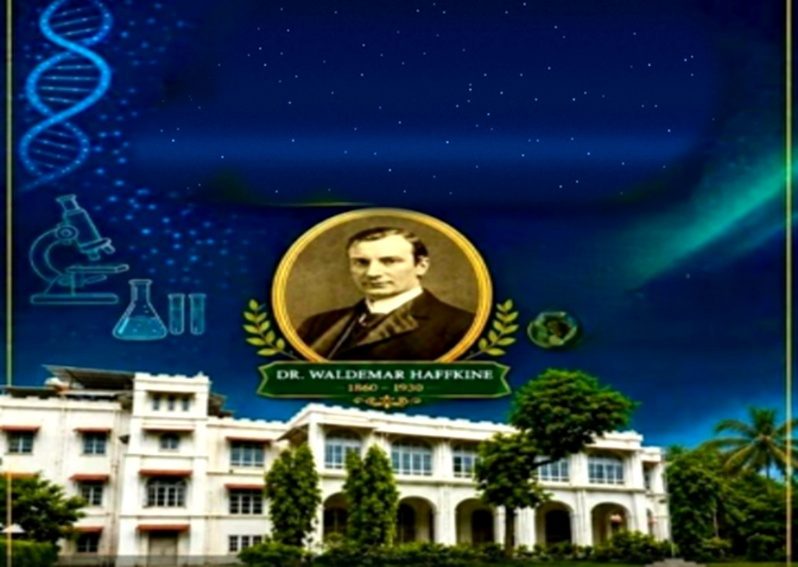
The Institute traces its origins to 1899, when Waldemar Mordecai Wolff Haffkine established a research laboratory in Bombay (now Mumbai) to produce vaccines against cholera and plague. Renamed the Haffkine Institute in 1925 in his honour, it became one of Asia's foremost centres for biomedical research.
Alongside the laboratories grew the library — a working collection of bacteriology, immunology and public-health literature assembled to support the Institute's scientists. Over more than a century it has expanded from bound journals and monographs into a hybrid library spanning printed holdings, an online catalogue and a digital repository.
Update this section with your library's own milestones, notable librarians and collection highlights.
Our buildings
Where the collection lives, and the heritage campus it belongs to.
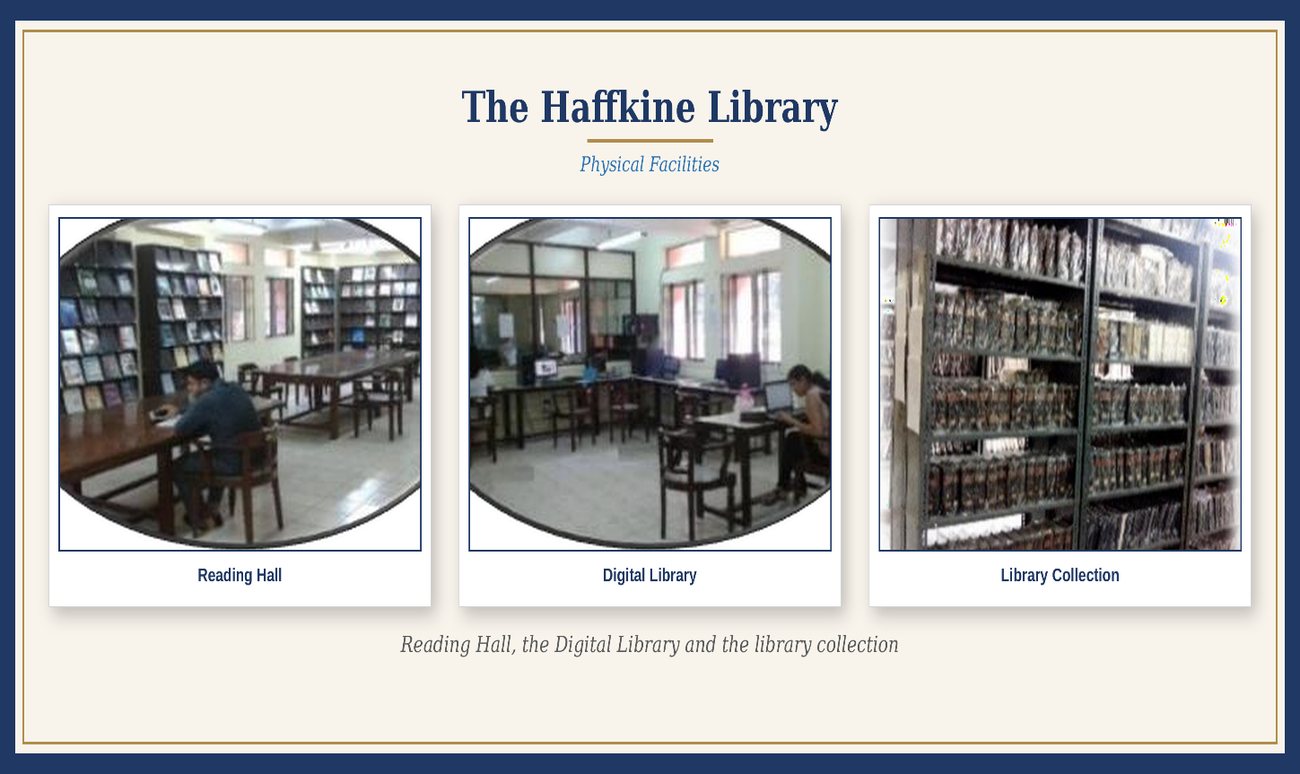
The reading room, stacks and reference desk. Replace this placeholder with a photo of the library entrance or interior.

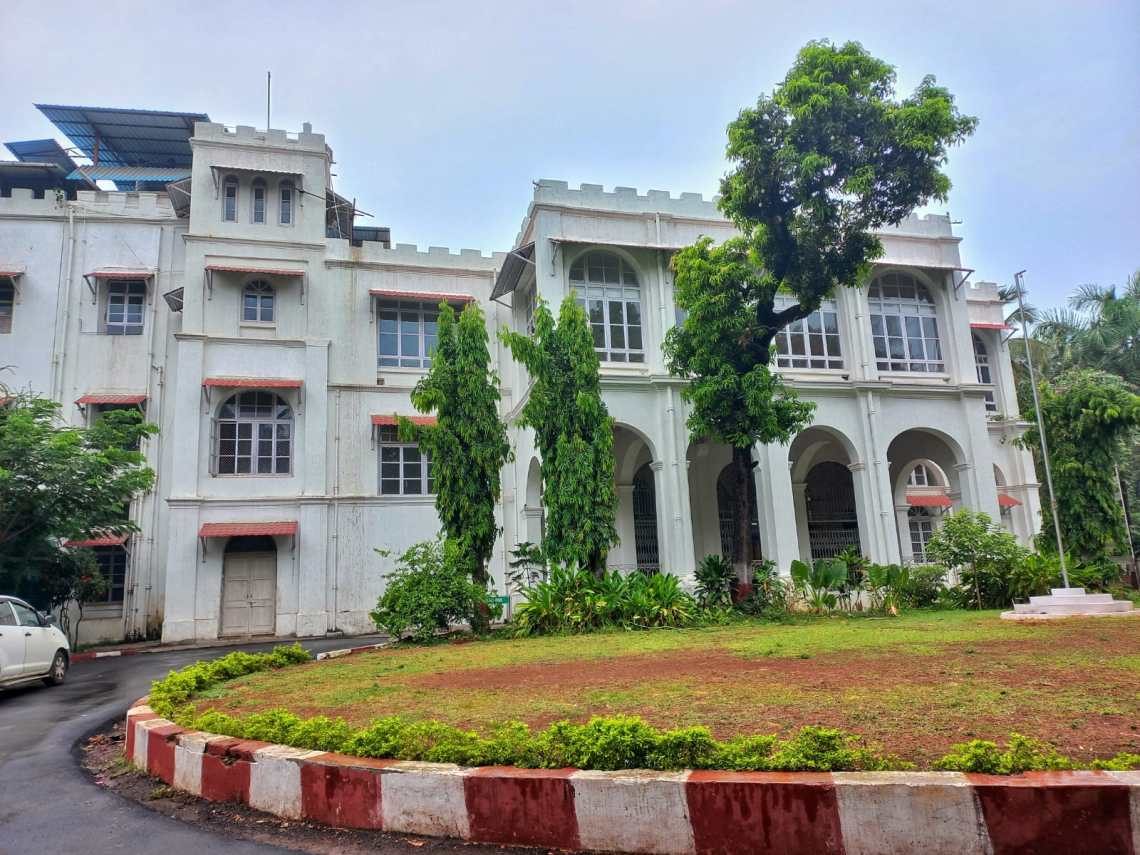
The historic Haffkine Institute campus at Parel, Mumbai, set within a heritage estate.
To use real photos, replace the placeholder inside each .photo frame with <img src="your-photo.jpg" alt="...">.
One catalogue. Every resource. Search it all.
Discover books, journals, theses and datasets across the Institute's Koha catalogue and DSpace repository — then move outward to national and open-access biomedical knowledge.
Quick access
Jump straight to any collection or service.
Library orientation
New here? Start with a five-minute walk-through of the catalogue, the repository and how to borrow.
Paste your YouTube video ID in the code (loadVideo) to play the real orientation film here.
Know our scientists
A glimpse of the gallery.
From our YouTube channel
Lectures, tutorials and institute stories.
Koha OPAC
Search the Institute's holdings — printed books, e-books, journals, reports and audiovisual material — and check availability in real time.
DSpace Repository
Open the Institute's scholarly output — theses, dissertations, research papers, annual reports, pre-prints and digitised archives.
Open Resources
Open-source and freely accessible biomedical knowledge in one place — databases, national platforms, open-access journals, textbooks and research tools. Use the sub-tabs to move between them.
Literature
Clinical & Evidence
Molecular & Omics
Drugs & Chemicals
Citation & Reference
Discovery
Integrity & Identity
Plagiarism & Originality
Check your work for similarity before you submit, and follow sound citation practice. Institutional checking tools are available through the library — ask at the reference desk for access.
Avoiding plagiarism — the essentials
- Cite every source you quote, paraphrase or draw data from.
- Put direct quotations in quotation marks and reference them.
- Paraphrase in your own words and structure, not by swapping synonyms.
- Track sources as you research — a reference manager makes this easy.
- Run a similarity check before submitting, and review every flagged match.
Need Turnitin or DrillBit access, or help reading a similarity report? Ask a librarian →
Research Labs
The Institute's research divisions and the biomedical questions they work on. Update these cards with your current lab list and links.
Know Our Scientists
The researchers whose work defines the Institute — from its founder to today's faculty. Replace the placeholder cards with your current directory.
Watch
Orientation films, database tutorials and lectures from the Institute's YouTube channel. Swap in real video IDs to play them inline.
Library orientation
Start here if you're new to the catalogue and repository.
YouTube gallery
Tutorials and talks.
Library Manual
How the library works — membership, borrowing, digital access and conduct in the reading room.
Membership
Membership is open to Institute staff, research scholars, project fellows and registered students. Bring your ID to the circulation desk to enrol; remote e-resource access is activated once your membership is confirmed.
Borrowing & renewals
- Loan periods and limits vary by member category — check your account in the Koha OPAC.
- Renew online through My account unless the item is reserved by another reader.
- Reference works, rare items and current journals are for in-library use only.
Digital access
Search books in the Koha OPAC and scholarly output in the DSpace repository. National e-resources are reached through e-ShodhSindhu and remote-access gateways; open-access databases need no login.
Reading-room conduct
- Keep the space quiet; silence mobile devices.
- No food or drink among the collections.
- Handle rare and archival material with care and staff guidance.
Ask a Librarian
Stuck on a search, a citation or finding full text? Send us the details and a librarian will help.
Other ways to reach us
DESK
Circulation & Reference Desk, Ground Floor.
EMAIL
library@haffkineinstitute.org (update to your address)
HOURS
Monday–Saturday, 09:00–17:30.
Visit the Library
Almost everything is online — so why come in? Because some things only happen at the desk and among the shelves.
Plan your visit
Update the address, map link and hours to match your library's details.